

Certified eDelivery with Doxee Platform®
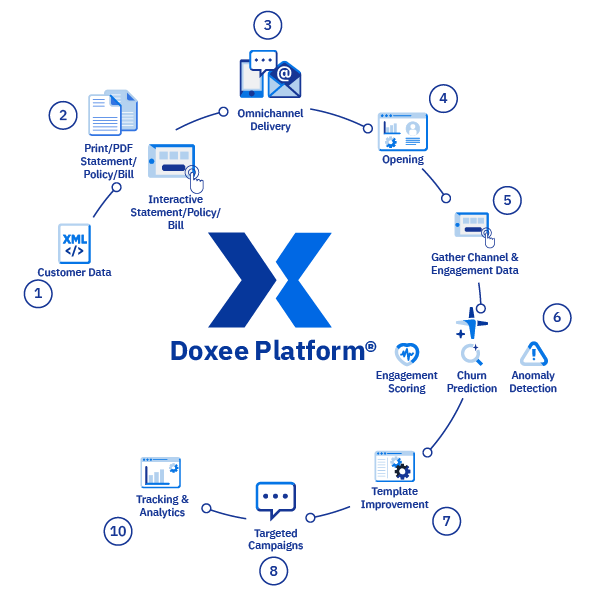
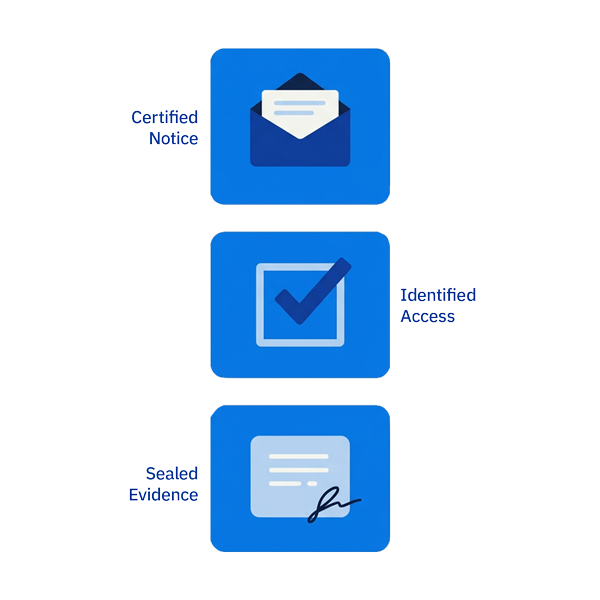
Doxee Platform® turns legally significant communications into certified digital delivery. Documents are composed from your core data, dispatched by certified email or SMS, opened by an authenticated recipient, and evidenced end to end — non-qualified (ERDS) or qualified (QERDS), matched to the legal weight each one carries.


Replace Registered Post with Certified Digital Delivery
Doxee’s certified eDelivery is electronic registered delivery (ERDS) that replaces registered post and unevidenced email with legally valid electronic delivery. The platform composes the document from your core data and dispatches a certified email or SMS carrying a secure link — no enrolment and no digital domicile required. The recipient authenticates, by one-time password for the non-qualified tier or by SPID or CIE electronic identity for the qualified tier, and the document opens on a protected page. Reminders and further delivery attempts run until access or expiry, and the process releases a signed, timestamped evidence document certifying sending, delivery and opening. Delivered omnichannel and processed entirely within the EU.
50%
Certified Opens
A utility’s soft-dunning programme reached 50% certified opens on certified digital delivery, against 37% on paper.
53%
Paid on Open
Of recipients who opened the certified communication, 53% went on to pay, against 30% on paper.
1 Day
Outcome Visibility
Delivery and opening outcomes land within a day, against the seven days or more a paper cycle needs.
+18%
Reminder Uplift
In a telecoms programme, each reminder after the first notice added a further 18% of certified opens.
50%
Paper Removed
The same operator moved dunning and service notices entirely off paper for its digitally contactable base.
10 Years
Evidence Retained
Signed, timestamped evidence is preserved for the statutory retention period, ten years for qualified delivery.
From Document to Legal Proof
How Doxee Platform® turns a communication into evidenced ERDS or QERDS delivery.
Two Legal Tiers
ERDS and QERDS on one platform, chosen per communication.
No Recipient Signup
Reaches a personal email or mobile; nothing to enrol in.
Composition Included
Documents generated from core data, then delivered certified.
Multi-Attempt Delivery
Configurable retries and reminders until access or expiry.
Identity-Bound Access
OTP for ERDS; SPID or CIE electronic identity for QERDS.
Documentary Evidence
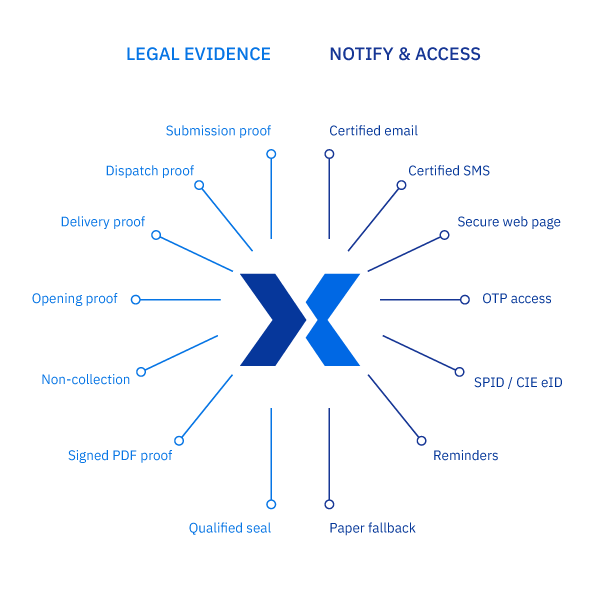
Signed, timestamped proof of sending, delivery and opening.
Certified Archiving
Evidence preserved with legal value for the retention period.
EU-Sovereign & Governed
API-first, human-in-the-loop and fully EU data-sovereign.
One Platform, Every Delivery Level
Certified email and SMS, identity-bound access and legal evidence from one platform.
Certified Email & SMS
A certified notification with a secure link to the document.
No Enrolment Needed
Delivery to a personal email or mobile; no digital domicile.
OTP or eID Access
OTP for ERDS; SPID or CIE identity for QERDS access.
Configurable Reminders
Retention window, cadence and channel set per flow.
Branded Experience
Notification and landing page styled to your brand.
Attachments Supported
Further documents carried with the certified communication.
Evidence on Completion
A signed, timestamped PDF certifying delivery and opening.
Optional Archiving
Evidence preserved in the legal electronic archive.
The Right Tier for Each Notice
ERDS or QERDS, matched to the legal weight each communication actually carries.
Formal Default Notice
Messa in mora and disconnection warnings, delivered as QERDS.
Soft Dunning
Payment reminders and courtesy notices at ERDS economics.
Contract Changes
Unilateral condition changes with provable notice of the right of withdrawal.
Service Interruption
Planned and unplanned interruption notices, evidenced.
Policy & Claims
Renewals on ERDS; claim decisions and rejections on QERDS.
Banking Disclosures
MiFID II duties, repayment plans and due-diligence exchanges.
Contract Delivery
Executed contracts delivered with proof and withdrawal rights.
Bills & Statements
Certified delivery of bills and statements at scale.
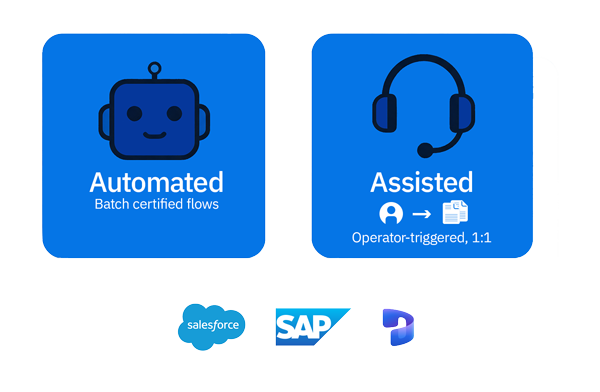
Batch Volumes or On-Demand
High-volume certified flows and single, operator-triggered sends on one platform.
Transactional Batches
High-volume certified flows generated straight from your ERP.
On-Demand Sending
Single sends triggered from CRM at the click of a button.
Delegated Operator
QERDS lots authorised by a named operator via SPID or CIE.
Flexible Intake
SFTP, structured files and REST submission into one pipeline.
Status Feedback
Per-item delivery state flows back to CRM, ERP and billing.
Reminder Automation
Further notices fire automatically until access or expiry.
Paper Fallback
Undeliverable digital items escalate to registered post.
Elastic Scale
Stateless services scale to dunning and billing peaks.
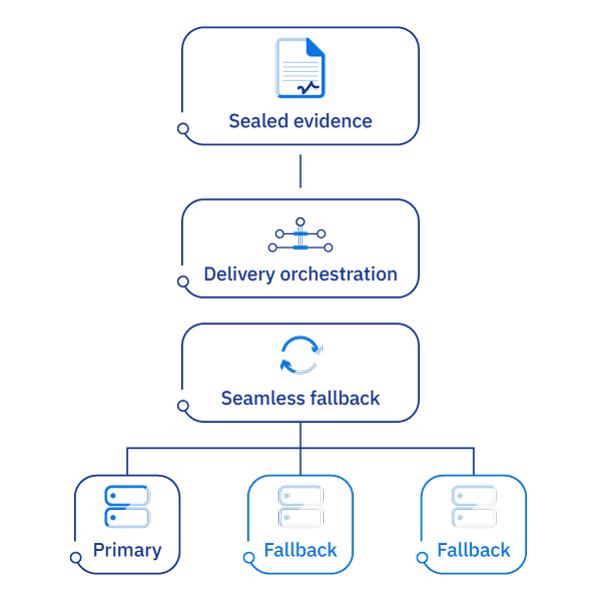
Deliver Anything, Never Stall
Doxee Platform® orchestrates certified delivery providers with seamless fallback.
Embedded In-Flow
Certified delivery on any document without leaving the flow.
Multi-Provider
One workflow orchestrating several certified delivery engines.
Intelligent Routing
Route each item to the best-fit provider and channel.
Seamless Fallback
Automatic failover to secondary providers on primary failure.
Business Continuity
Certified sending keeps running through provider outages.
Both Legal Tiers
Non-qualified (ERDS) and qualified (QERDS) in one workflow.
Channel Escalation
Email, SMS and registered post escalated by configured rules.
Assisted or Automated
Batch flows and single operator-triggered sends alike.
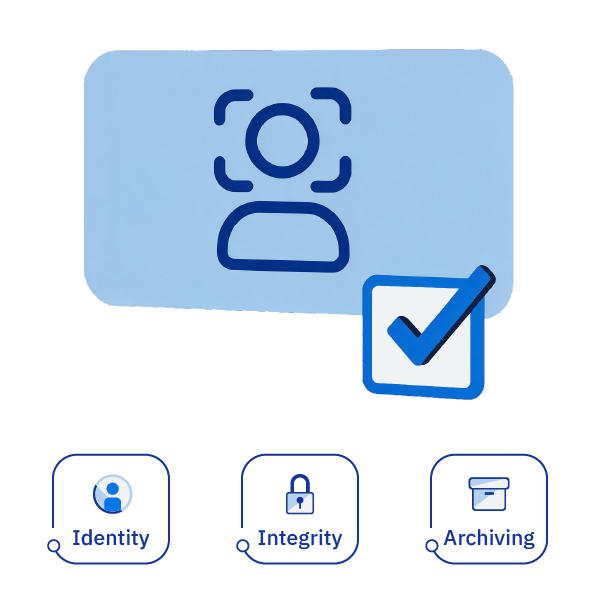
Verified, Compliant, Preserved
Recipient identification, sealed evidence and certified archiving aligned to eIDAS.
Flexible Identification
OTP for ERDS; SPID or CIE electronic identity for QERDS.
Fiscal Code Match
The identity returned must match the recipient on submission.
Sender Authorisation
QERDS lots authorised by an identified delegated operator.
eIDAS-Aligned
Articles 43 and 44 of EU 910/2014, as amended in 2024.
Tamper-Evident
Content hashed at intake; evidence sealed and timestamped.
Full Audit Trail
Sending, delivery, opening and non-collection all recorded.
Certified Archiving
Evidence preserved with legal value for the retention period.
EU Data Sovereignty
EU-resident data for regulated sectors.
Every Delivery, Measured
Tracking and analytics close the loop from dispatch to legal outcome.
Real-Time Tracking
Follow every item from dispatch to opening or expiry.
Explicit State Machine
Sent, delivered, read, evidenced, expired — all explicit.
Outcome in a Day
Delivery outcomes available within a day, not a paper week.
Non-Collection Proof
Expiry without access produces a sealed evidenced outcome.
Reminder Analytics
See how much each reminder adds to certified opens.
Dashboard & Reports
Production, channel and delivery reporting in one view.
Closed-Loop Feedback
Delivery data flows back to CRM, ERP and collections.
Continuous Optimisation
Refine channel mix and cadence as behaviour evolves.
Most Recent Recognitions
For more than a decade, leading industry analysts have recognised Doxee’s technological excellence and forward-looking vision in Customer Communications Management (CCM) and Customer Experience Management (CXM). The latest reports confirm the strength of the Doxee Platform’s cloud-native, AI-powered, integration-first approach and highlight Doxee as a trusted partner for enterprise digital engagement.


Related industries: Utilities & Energy · Telco & Media · Banking · Insurance · Public Sector
FAQ
What is Doxee's certified eDelivery solution?
A certified email or SMS carrying a secure link to the documents you need to notify: the recipient authenticates, opens them on a protected page, and evidence is released.
What is the difference between ERDS and QERDS?
ERDS (eIDAS Article 43) cannot be denied legal effect or admissibility. QERDS (Article 44) adds four rebuttable presumptions: integrity, sender, addressee and time.
Does the recipient need to register or hold a digital domicile?
No. The certified notification reaches an ordinary personal email address or mobile number, which makes the service directly usable in business-to-consumer scenarios.
How is the recipient identified?
For ERDS, by a one-time password or access code proving control of the channel. For QERDS, by SPID or CIE, with the fiscal code matched against the one supplied at submission.
What evidence does the process produce?
A signed, timestamped PDF recording sender and recipient, subject, the dates of sending, delivery and access, the identification method, attachments and content hashes.
What happens if the recipient never opens the communication?
The retention window closes and a sealed non-collection outcome is evidenced, so an unread communication remains a documented legal result rather than a gap.
Can reminders and multiple delivery attempts be configured?
Yes. Retention period, the number and cadence of reminders and the channel mix are set per flow, and further notices fire automatically until access or expiry.
Which industries and communications is it used for?
Utilities, telecommunications, banking, insurance and public administration — soft dunning and bills on ERDS; formal default, condition changes and claim decisions on QERDS. It is the digital alternative to registered post and certified email (PEC) for B2C notices.
Is the evidence archived, and for how long?
Evidence is preserved for the statutory retention period, ten years by default for qualified delivery, and can optionally be committed to the legal electronic archive.
How does it integrate with our core systems?
Documents are composed by the platform from ERP, CRM or billing data and submitted over SFTP or REST, with per-item delivery status fed back for monitoring and reporting.
